

15 July 2026
Getting married at a French town hall: a checklist of documents and deadlines
The commune, supporting documents, witnesses and publication of the banns: official points to understand, followed by the details to confirm directly with your mairie.
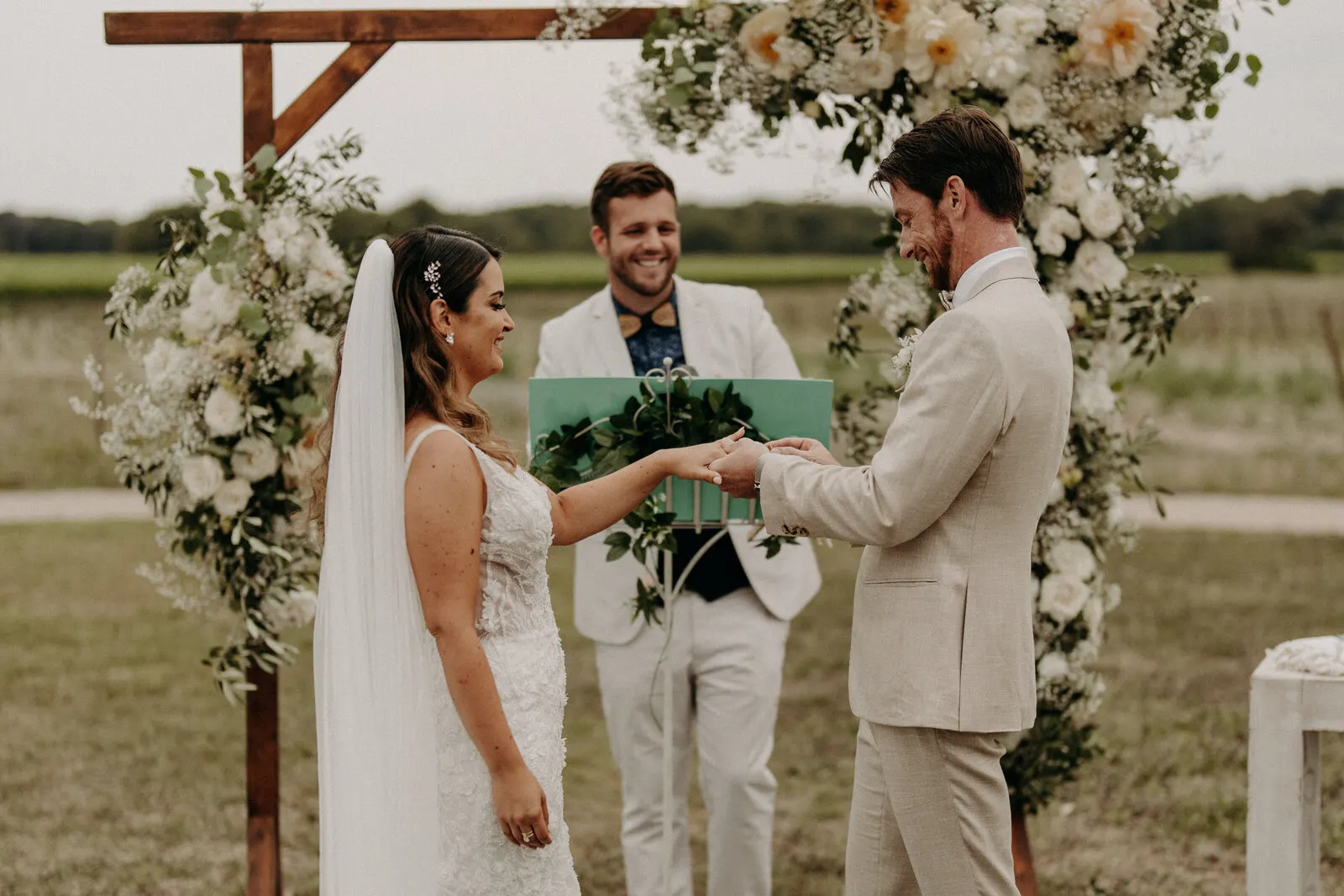
You've found a date that suits the venue and your loved ones. You still need to check that the town hall, or mairie, can hold the ceremony and that your marriage application will be complete. This may seem like the administrative part, but it shapes everything else: timings, travel, invitations and sometimes the final wedding date.
You don't need to know everything before making contact. I suggest using this checklist to prepare, then checking your commune's instructions and the official guide to marriage in France on Service-Public.fr, as your personal circumstances may affect the documents required.
Which commune, or municipality, can you get married in?
The marriage takes place in a commune with which at least one of you has an established connection. This may, in particular, be the commune where either of you has your home or residence, or where one of your parents lives.
Being born in a commune doesn't, on its own, entitle you to marry there. If you intend to rely on a parent's residence or a second home, ask early which supporting documents will be required.
Contact the mairie before coordinating suppliers
Appointment arrangements and application deadlines vary. Some town halls open bookings during a particular period; others wait for a complete application before confirming the date.
Ask:
- when and how to submit the application;
- whether an appointment is compulsory;
- which ceremony times are available;
- which documents apply to your circumstances;
- at what point the date is actually confirmed.
The basic documents to prepare
According to Service-Public.fr, the application requires, among other things, proof of identity and proof of your home address or residence. The mairie may sometimes be able to obtain your civil-status information directly from the commune where you were born; contact it to find out whether you need to supply a birth certificate.
Other documents may be needed if you have been married before, are widowed, are a foreign national, were born abroad, are entering into a French marriage contract or have particular circumstances. Don't reuse a list from an old blog without checking it.
Information about your witnesses
For each witness, prepare:
- surname and first name;
- date and place of birth;
- occupation;
- home address;
- a copy of an identity document.
Ask for these details well in advance. A blurred photograph received the day before submission is an easily avoidable complication.
Publication of the banns
The mairie publishes the banns for ten days. The marriage cannot take place before the tenth day following publication. This legal period doesn't mean you can submit your application ten days before the ceremony: the town hall first needs to examine it and may have its own timetable.
The interview and examination of your application
The civil registrar may interview you together and, if they consider it necessary, separately. The Service-Public guide states that this interview is compulsory unless it is impossible or the registrar considers it unnecessary.
So allow some flexibility in your administrative timetable, especially if you don't live near the commune you've chosen.
If you're considering a French marriage contract
A French marriage contract, or contrat de mariage, must be drawn up by a notaire before the ceremony. Service-Public recommends starting several weeks in advance. The considerations include your assets, any children and your professional circumstances.
This is a matter for the notaire, rather than the wedding planner. I can, however, put the appointment in the right place in your planning timeline so it isn't overlooked.
The final checklist
- the commune and the connection through home address or residence are confirmed;
- the mairie's specific instructions have been obtained;
- the submission date and appointment are in your diary;
- identity documents and supporting evidence are gathered;
- your witnesses' details and documents have arrived;
- any additional documents have been checked against your circumstances;
- a marriage contract has been arranged in advance if needed;
- the civil ceremony time is built into the travel plans and schedule.
Once the time is confirmed, share it with your photographer and whoever is putting the schedule together. An extra ten minutes at the town hall or difficult parking can have a knock-on effect right through to the drinks reception.
I can build this step into the planning timeline and the overall schedule. You keep responsibility for the formalities that belong to you; I make sure they happen at the right point in the preparations.
You keep the choices. I’ll handle the rest.
You might need help with all your plans, coordination before the day or simply a professional view on one decision. Let's start with what you've already arranged.
Let’s talk about your wedding