
15 July 2026
Behind the scenes of a wedding in the Hérault: what the photographs don't show
Behind a ceremony that runs smoothly, someone has checked access, adjusted a time and answered suppliers' questions. Follow a typical schedule, without inventing a perfect wedding.

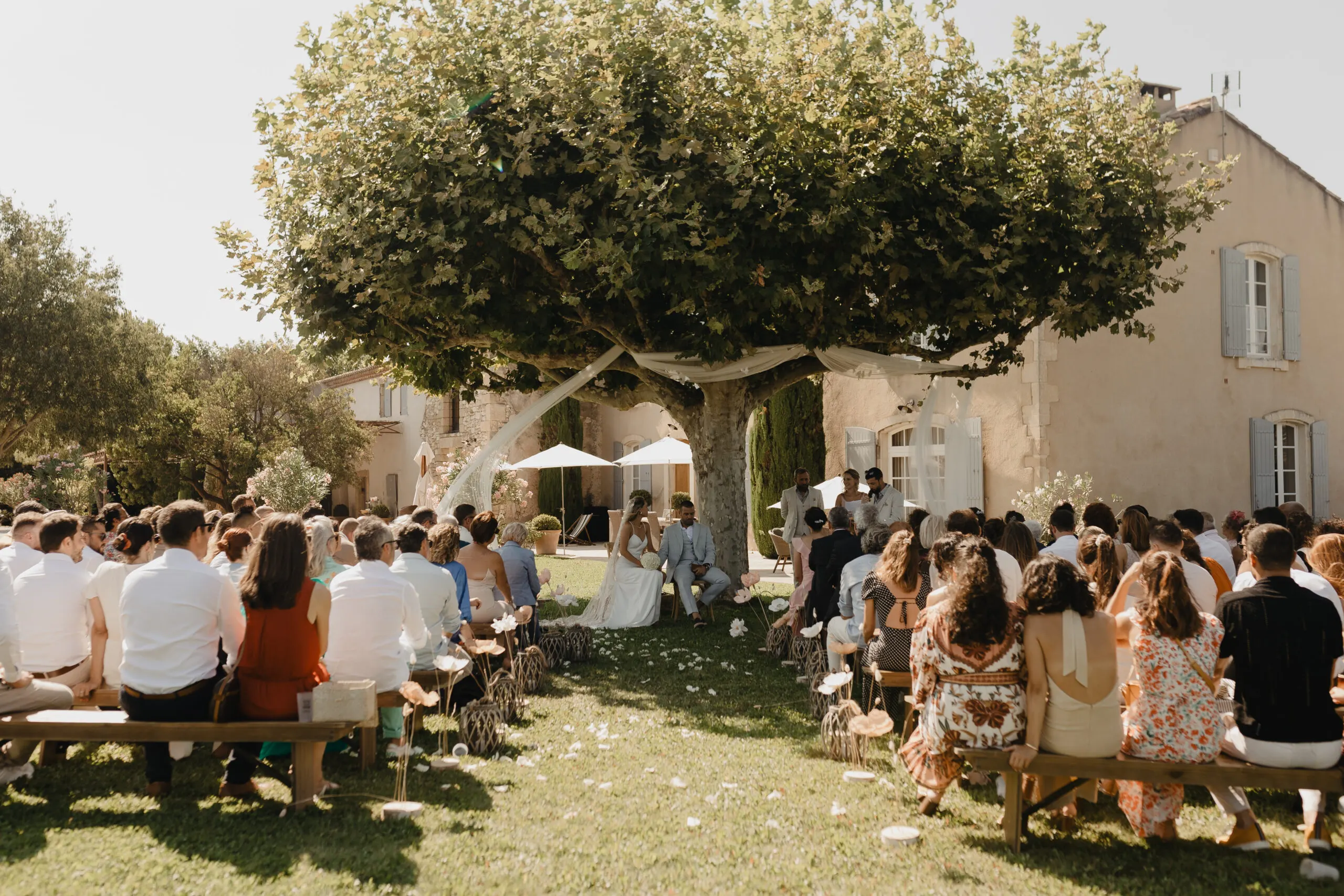
In the photographs, you'll see the flowers in place, guests arriving and the couple entering the ceremony. You won't see the delivery brought forward by an hour, the message sent to the caterer or the decision to move three chairs before family and friends arrive.
I'd like to take you through a typical example based on the tasks involved in wedding coordination. It doesn't describe a particular wedding or suggest that every day follows the same pattern. It simply shows the work that allows the visible moments to feel natural.
The day before: settle the questions still open
Contact details, timings and access information have already been sent. The day before is for confirming changes, rather than rebuilding the wedding.
- the weather and the decision about outdoor spaces;
- final guest numbers and special dietary requirements;
- the venue's opening time and who has the keys;
- the order of speeches and any known surprises;
- personal items to set out or give to someone.
The couple receive a clear confirmation. They shouldn't need to be included in every technical conversation between suppliers.
9 am: welcome deliveries without interrupting preparations
A delivery arrives at the estate while the couple are getting ready elsewhere. The coordinator knows the access route, the intended location and the venue contact.
If a quantity or colour doesn't match, the coordinator checks the quote and looks for a solution before calling the couple. Not every decision needs to reach them.
11 am: bring different suppliers' work together
The florist needs the tables in position. The caterer needs a clear service route. The DJ checks the power supply and the photographer looks at the light.
Everyone knows their own job. Coordination brings their requirements together so that one setup doesn't block another.
2 pm: protect the preparations from outside interruptions
The wedding party have a question about their speech. A guest says they'll be late. The photographer would like to bring a sequence forward. The information is prioritised: some of it changes the schedule; some of it can wait.
The role isn't to hide problems. It's to stop every small adjustment from occupying the couple's attention.
4 pm: make decisions with the information available
The wind picks up before an outdoor ceremony. Someone needs to check the safety of lightweight items, the stability of the sound equipment and the comfort of the guests. A useful weather decision rests on criteria prepared in advance, rather than the hope that “it should be fine”.
If the backup plan needs to be put into action, everyone knows what they are moving and in what order.
5 pm: absorb a small delay
The ceremony starts ten minutes late. That delay stays small if the caterer is told, the photographs are adjusted and no entertainment starts at the wrong moment.
A solid schedule includes breathing room. Without it, ten minutes has a knock-on effect on the drinks reception, dinner and then the first dance.
7 pm: guide guests without overdoing the announcements
Guests don't need a microphone announcement at every transition. They mainly need to know where to go, where to leave a gift, when group photographs begin and whether transport has been arranged.
Clear signs, a few well-timed announcements and people who have been briefed are often enough.
9 pm: coordinate what isn't on the menu
A speech needs shortening, a surprise needs five minutes of preparation or two guests change seats. The coordinator speaks with the caterer and DJ to protect the pace of service.
Dinner stays lively because the speeches and surprises fit into it, rather than being added at the last minute.
Midnight: let the party continue
The work doesn't disappear after the first dance. There may still be a shuttle to confirm, fragile items to put away, a supplier's finish time to check or things to prepare for collection the following day.
The couple don't need to know when the hire crates will be moved. That's exactly the boundary we're aiming for.
What a smoothly run day really shows
Successful coordination doesn't remove every unexpected event. It stops those events from becoming the main story of the wedding. Family and friends can remain family and friends, suppliers know who to speak to and the couple can give their attention to the moments they'll experience only once.
If your wedding brings together several venues, outdoor spaces, installations and numerous contacts, I can work through what needs to happen behind the scenes with you. We'll look at the support actually needed on the day, without asking you to hand over more than you want to.
You keep the choices. I’ll handle the rest.
You might need help with all your plans, coordination before the day or simply a professional view on one decision. Let's start with what you've already arranged.
Let’s talk about your wedding